
Buying business premises may look simple until an unexpected lease restriction, financing condition or tax problem arises. A commercial property lawyer will help you to identify these risks, understand your obligations and move toward completion with greater confidence.
Whether you’re buying an office, selling a shop or negotiating a business lease, choosing the right adviser starts with asking practical questions before you sign up.
Why the Right Commercial Property Lawyer Matters in Singapore
Commercial property law is about ownership, contracts, planning requirements, financing and taxation. Even a “commercial” property may still have restrictions that affect your ability to occupy, renovate, lease or sell it.
Recent market movements also deserve attention. URA’s 2nd Quarter 2026 real estate statistics, released on 24 July 2026, recorded a 0.8% quarterly increase in office rentals, following a 0.2% decline in the previous quarter. For businesses comparing premises, this reinforces the value of examining lease commitments alongside headline costs.
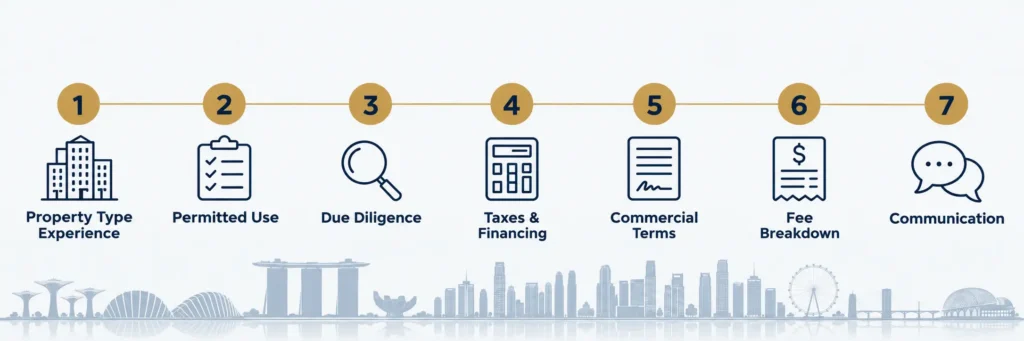
Your lawyer’s role is to connect the legal documents with your intended use and commercial priorities. These seven checks will help you assess whether a firm can do that.
1. Check Experience with Your Property Type
Commercial conveyancing in Singapore involves many different assets, each with its own issues to consider. If you’ve only done residential transactions, that might not address your specific concerns.
Ask if the lawyer often deals with the following:
- Offices, retail units and shophouses.
- Industrial premises and leasehold interests.
- Purchases with existing tenants.
- Commercial leases and financing documents.
For example, buying a tenanted shop in Balestier raises questions about rental deposits, arrears and tenancy obligations. Those issues differ from purchasing vacant premises for your own business.
Adel Law’s conveyancing services provide an overview of the legal support available for property transactions.
2. Ask How They Check Permitted Use
A suitable location does not automatically mean your proposed business can operate there.
Your lawyer should explain how the transaction will address:
- The premises’ approved use and applicable planning restrictions.
- Whether a change of use application is required or an authorisation applies.
- Relevant information on landlords, head lessors or management corporations requirements.
- Separate operating licenses and technical approvals.
A future café operator has to verify which regulations relate to restaurant use, licensing, and renovations before undertaking an expensive fit-out for a shophouse, for example.
Clarify which checks the lawyer handles and which require an architect, qualified person or licensing adviser. Legal review and technical assessment often work hand in hand.
3. Look for a Clear Due Diligence Process
“Due diligence included” should come with an explanation of the work involved.
Ask the lawyer to identify the searches, documents and enquiries appropriate to your transaction, including:
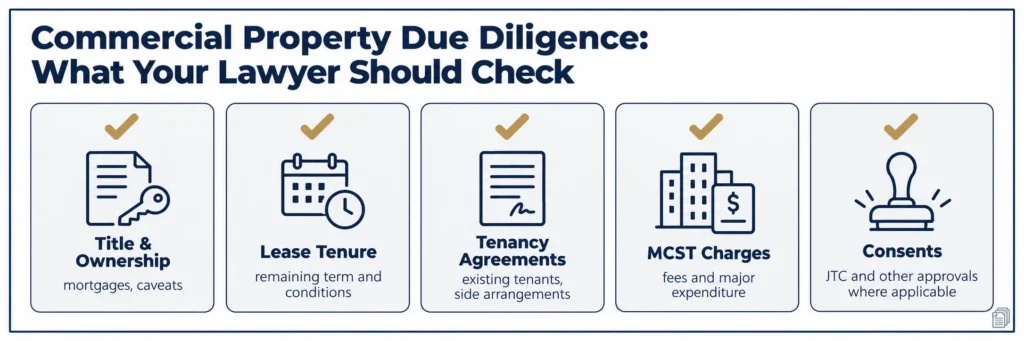
- Registered ownership, mortgages, caveats and other title matters.
- Remaining lease tenure and relevant lease conditions.
- Existing tenancy agreements and side arrangements.
- Management corporation charges and disclosed major expenditure.
- Required consents, including JTC consent where applicable.
Request a clear explanation of material findings before the next binding deadline. You should understand what needs resolving, what may be accepted commercially and what could justify reconsidering the deal.
For background on the stages involved, read our guide to the conveyancing process.
4. Confirm They Explain Taxes and Financing Early
The purchase price is only part of your funding requirement.
Ask for an initial explanation of:
- Buyer’s Stamp Duty and applicable stamping deadlines.
- Whether GST applies and how the contract allocates it.
- Any residential component requiring separate tax consideration.
- Loan conditions, security documents and personal guarantees.
- Potential Seller’s Stamp Duty when disposing of industrial property.
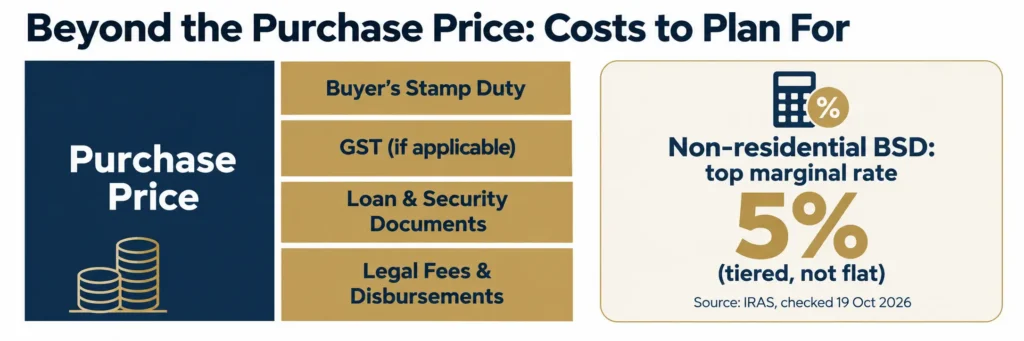
According to IRAS’s Buyer’s Stamp Duty guidance, the top marginal BSD rate for non-residential property is 5%, effective 15 February 2023; guidance checked 19 October 2026. This is a tiered calculation, rather than a flat charge on the entire price.
GST treatment and any input tax recovery require separate assessment. Your lawyer should identify when tax advice is needed and coordinate with your accountant.
5. Check How They Review Commercial Terms
A commercial property purchase lawyer should explain how the documents allocate risk.
For a purchase or sale, discuss:
- Option exercise and completion deadlines.
- Financing or approval conditions, where negotiated.
- Vacant possession or purchase subject to tenancy.
- Rental deposits, arrears and completion adjustments.
- Consequences of delay, breach or failed completion.
For a lease, ask about rent reviews, repair obligations, reinstatement, renewal options, assignment and early termination.
Our resource on buying and selling property in Singapore offers further context. Your transaction documents still need individual review.
6. Request a Written Fee Breakdown
Comparing commercial conveyancing fees is easier when each quotation covers the same scope.
Request a breakdown showing:
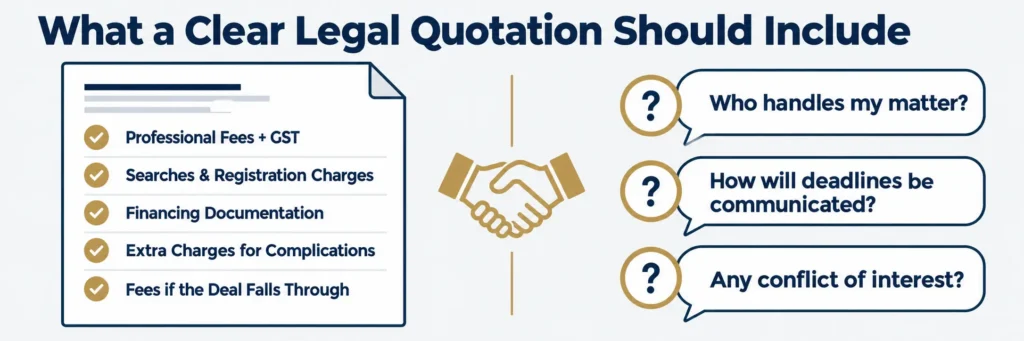
- Professional fees and GST.
- Searches, registration charges and other disbursements.
- Separate financing documentation fees, if applicable.
- Add additional charges for unusual negotiations or complications.
- Fees payable if the transaction does not proceed.
What assumptions does the quotation make? A simple sale may require a considerable amount of work if there are title issues, consent requirements or if the terms of the tenancy are disputed.
A good quotation provides an approximate price and the service that can be expected.
7. Agree on Communication and Responsibility
Property transactions involve several parties and deadlines. Clear responsibility helps prevent avoidable confusion.
Before instructing the firm, establish:
- Who will supervise and handle your matter.
- Who will explain significant risks and documents.
- How urgent deadlines and outstanding items will be communicated.
- Whether the firm can act for your proposed lender.
- Whether any conflict affects its ability to represent you.
Bring your draft documents, financing details, intended use and target dates to the first discussion.
Take the Next Step with Adel Law LLC
Choosing a commercial property lawyer means finding someone who can explain the risks clearly and help you make informed decisions.
Buying, selling or leasing business premises? Contact Adel Law LLC to discuss your transaction and the legal support it requires.
Frequently Asked Questions
When should I engage a commercial property lawyer in Singapore?
Consult a lawyer before signing documents or paying a significant deposit. Deadlines for exercise of options and use permitted will be explained to you, and lawyer will advise on funding conditions and whether the proposed terms and documents will protect your interests.
How much are commercial property lawyer fees in Singapore?
Fees depend on the particular property, the structure of the transaction, the client’s financing, and the scope of the engagement. Request a separate quotation for professional fees, Goods and Services Tax (GST), and disbursements, with details of assumptions and additional charges.
What does a lawyer check when buying commercial property?
A lawyer examines title, transaction documents, restrictions, existing tenancies, and completion requirements. The scope of review should be agreed at the outset, and should include responsibility for planning, technical, licensing and tax enquiries.