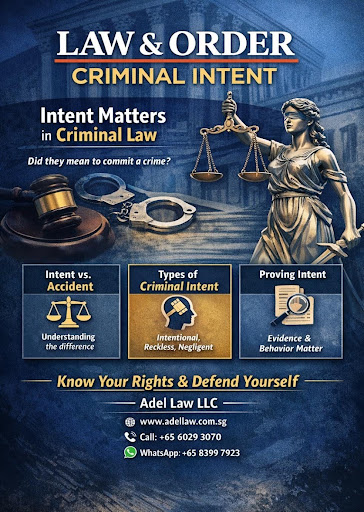
The concept of law and order criminal intent plays a central role in determining criminal liability. In criminal law, courts examine not only what a person did but also their state of mind at the time of the offense. This mental element, known as mens rea, often determines whether a crime was committed and what penalties may apply.
Understanding criminal intent helps explain why similar actions can produce different legal outcomes. A deliberate act is generally treated more seriously than an accident or an honest mistake.
What Is Law and Order Criminal Intent?
Criminal intent, also known as mens rea, refers to the mental state behind a criminal act. In many legal systems, prosecutors must prove that a person not only committed the prohibited act but also possessed the required intent or awareness when doing so.
The law distinguishes accidental conduct from deliberate wrongdoing. For example, accidentally damaging someone’s property is treated differently from intentionally destroying it.
Common types of criminal intent include:
- Intentional conduct – Deliberately planning or committing a crime.
- Knowing conduct – Understanding that one’s actions will likely cause harm.
- Reckless behavior – Disregarding obvious risks.
- Negligence – Failing to exercise reasonable care when required.
Each level of intent may affect criminal responsibility and sentencing.
Why Criminal Intent Matters
Intent is a fundamental principle of criminal law because it promotes fairness. Without considering a person’s mental state, individuals could face criminal liability for genuine accidents or misunderstandings.
Courts use criminal intent to determine:
- The seriousness of the offense
- Whether a criminal offense actually occurred
- The appropriate punishment
- Whether a legal defense may apply
For example, taking another person’s property by mistake differs significantly from intentionally stealing it. Courts therefore examine the surrounding circumstances before reaching a decision.
Examples of Criminal Intent
Real-world examples help illustrate how intent affects criminal liability.
- Example 1: A person deliberately sets fire to a building. This demonstrates clear criminal intent.
- Example 2: A person accidentally starts a fire while cooking. This may not involve criminal intent.
- Example 3: A driver speeds through a crowded street despite obvious dangers. This may amount to reckless conduct.
Although the consequences may appear similar, the mental state behind each act leads to different legal outcomes.
How Prosecutors Prove Criminal Intent
Because intent cannot be observed directly, prosecutors rely on surrounding evidence to establish a person’s state of mind. This may include:
- Witness testimony
- Surveillance footage
- Statements made by the accused
- Evidence of planning or preparation
- Actions before and after the incident
Rather than relying on a single piece of evidence, courts consider the overall circumstances when deciding whether criminal intent existed.
Criminal Intent vs. Criminal Act
Most criminal offenses require both a guilty act (actus reus) and a guilty mind (mens rea). Having criminal thoughts alone is generally insufficient to establish criminal liability.
For example:
- Merely thinking about committing a crime is usually not punishable.
- Attempting or carrying out the criminal act may result in prosecution.
This distinction protects individuals from being punished solely for their thoughts.
Defenses Related to Criminal Intent
In some cases, defendants argue that the required criminal intent was absent. Common defenses include:
- Mistake of fact
- Lack of knowledge
- Accident
- Mental incapacity
- Duress or coercion
Courts evaluate these defenses alongside all available evidence to determine whether the required mental state existed.
Conclusion
Understanding law and order criminal intent provides valuable insight into how criminal courts determine responsibility. By considering both a person’s actions and mental state, the legal system distinguishes intentional wrongdoing from accidents or honest mistakes. This principle promotes fairness, supports consistent legal decisions, and helps ensure that criminal liability is imposed only when the required intent has been proven.