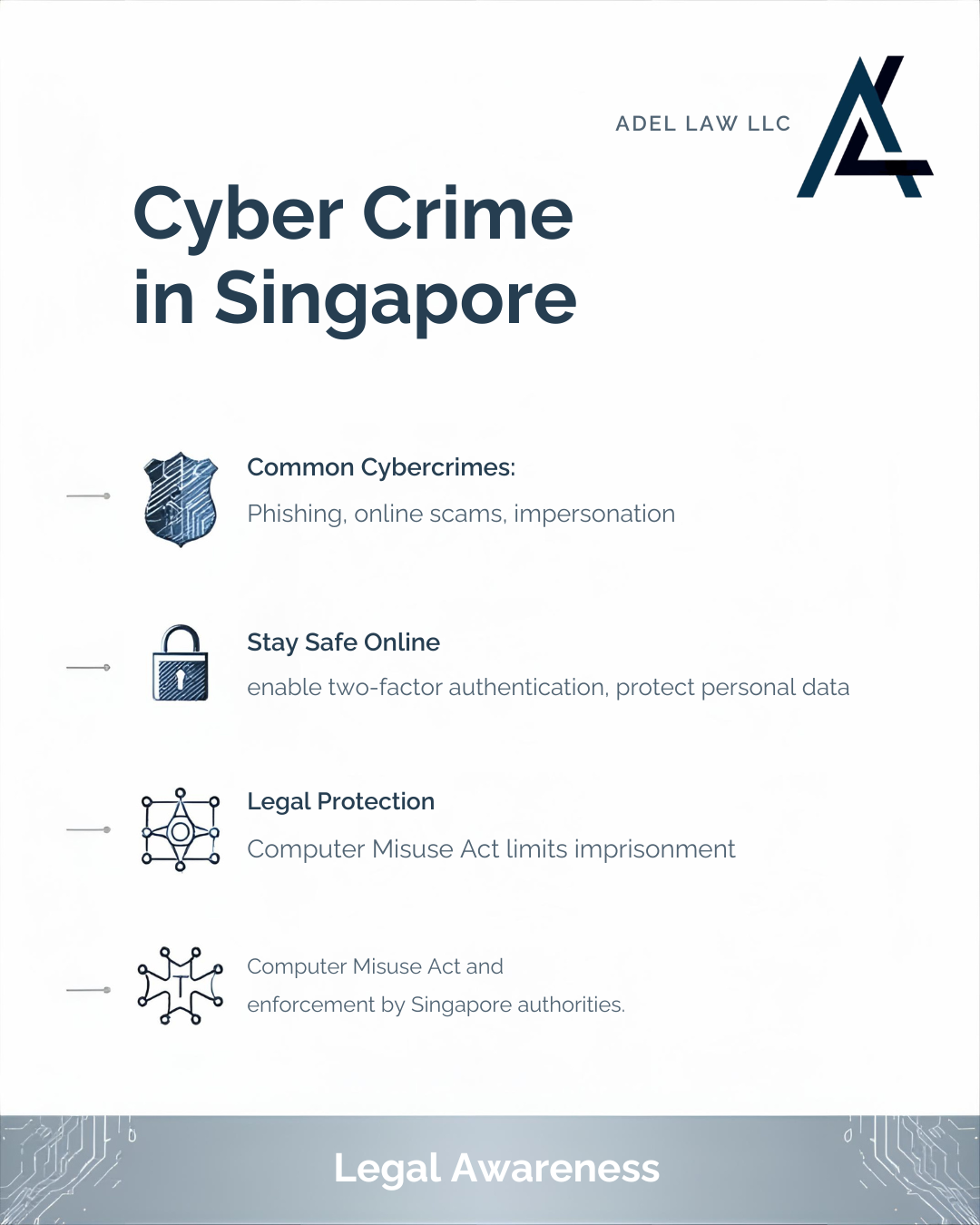
Cyber threats have increased across the world, and Cyber Crime in Singapore has become a growing concern for individuals, businesses, and government agencies. As one of the most digitally connected countries in Asia, Singapore relies heavily on online systems for banking, communication, and commerce. While this digital environment supports innovation and efficiency, it also creates opportunities for cybercriminals.
Understanding how cybercrime works and how the law addresses it is important for both individuals and organizations. This article explains the main types of cyber offenses, the legal framework, and practical steps to stay safe online.
What Is Cyber Crime?
Cybercrime refers to illegal activities that involve computers, digital devices, or online networks. These crimes often target personal data, financial accounts, or confidential information.
In the context of Cyber Crime in Singapore, offenders typically exploit technology to steal data, commit fraud, or disrupt digital systems.
Common forms of cybercrime include:
- Phishing scams that trick users into revealing sensitive information
- Identity theft involving stolen personal details
- Online financial fraud and payment scams
- Unauthorized access to computer systems
- Malware or ransomware attacks that lock or damage data
Many of these crimes occur through emails, fake websites, or compromised social media accounts. Because these attacks can happen quickly, awareness and prevention are critical.
Laws Governing Cyber Crime in Singapore
Singapore has strict laws to combat digital offenses and protect online users. The government continues to update legislation to address new cyber threats.
Key laws addressing Cyber Crime in Singapore include:
Computer Misuse Act (CMA)
This law targets unauthorized access to computer systems, hacking, and the spread of malicious software.
Penal Code Provisions
Certain online fraud cases fall under traditional criminal offenses such as cheating, forgery, and criminal breach of trust.
Personal Data Protection Act (PDPA)
This law protects personal information and requires organizations to manage customer data responsibly.
Penalties for cyber offenses can include heavy fines, imprisonment, or both. Serious cases involving large financial losses may result in long prison sentences.
Common Cybercrime Risks for Individuals
Individuals often become targets because criminals exploit human behavior rather than technical weaknesses. Many scams rely on urgency, fear, or trust to trick victims.
Typical risks associated with Cyber Crime in Singapore include:
- Fake bank messages asking users to verify account details
- Investment scams promising high profits with little risk
- Online shopping fraud involving fake sellers
- Social media account takeovers
Cybercriminals often impersonate trusted organizations such as banks, government agencies, or delivery companies. This makes it harder for users to recognize fraudulent messages.
How Businesses Are Affected
Businesses face significant risks when cybercriminals attack company systems or employees. A successful attack can expose sensitive customer information or disrupt operations.
Organizations dealing with Cyber Crime in Singapore may experience:
- Financial losses from fraudulent transactions
- Data breaches involving confidential records
- Damage to brand reputation and customer trust
- Legal consequences for failing to protect personal data
Because of these risks, many companies invest in cybersecurity tools, staff training, and regular security audits.
Preventing Cybercrime
Preventing cybercrime requires a combination of technology, awareness, and responsible online behavior. Both individuals and organizations must take proactive steps to reduce risk.
Effective prevention strategies include:
- Use strong, unique passwords for all online accounts
- Enable two-factor authentication whenever possible
- Avoid clicking suspicious links or attachments
- Keep devices and software updated with security patches
- Verify requests for money or personal information
Government agencies and cybersecurity organizations also provide public education campaigns to help reduce Cyber Crime in Singapore.
Conclusion
Digital technology has transformed how people live and work, but it also creates new security challenges. Cyber Crime in Singapore continues to evolve as criminals adopt more advanced methods to exploit online systems.
By understanding common cyber threats, following security best practices, and staying informed about legal protections, individuals and businesses can better protect themselves. Strong cybersecurity awareness remains one of the most effective tools for reducing digital crime and maintaining trust in Singapore’s digital economy.
Find out more about our services:
🌐 https://adellaw.com.sg
📞 +65 6029 3070
💬 WhatsApp: +65 8399 7923